Will FINTRAC Bill You? It Comes Down to 500 Reports
FINTRAC bills banks, trust and loan companies, life insurers and any business filing 500 or more threshold reports a year. Here's what counts.

FINTRAC doesn't send every business a bill for supervision. It sends one to banks, trust and loan companies, life insurers, and anyone who files 500 or more threshold reports in a year. Here's what counts toward that number, what doesn't, and how to see it coming.
Who Actually Gets a Bill From FINTRAC?
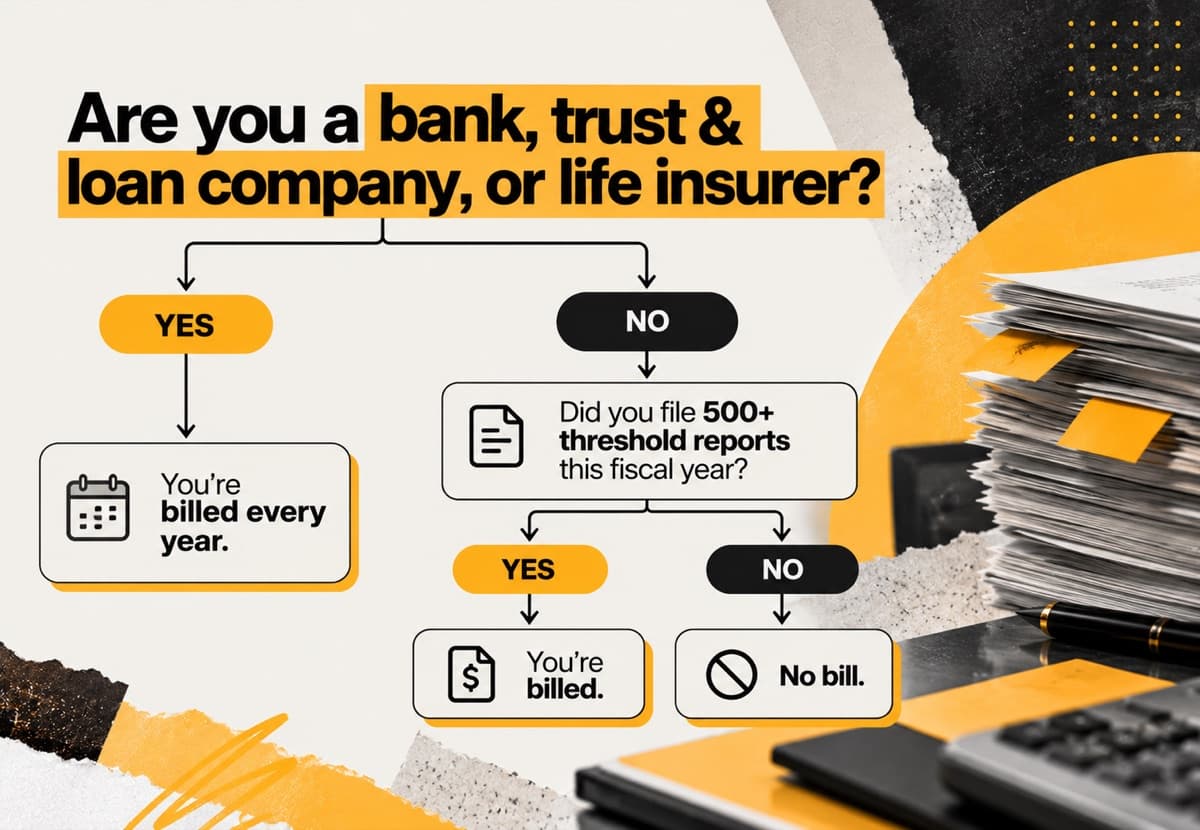
Fewer businesses than most people expect. The rules sit in the Assessment of Expenses Regulations, which came into force on January 1, 2024. The first charging year ran from April 1, 2024 to March 31, 2025.
Three groups are billed every year, whatever their reporting volume: banks and authorized foreign banks, trust and loan companies, and life insurance companies. Everyone else is billed only if they cross one line: 500 or more threshold reports in the fiscal year.
FINTRAC's own list for that first year included caisses populaires, casinos, credit unions, financial services cooperatives, money services businesses and foreign money services businesses, and provincial savings offices.
The list can change from year to year, because the line is a count, not a sector label.
Why Does the Number 500 Matter More Than Your Compliance Record?
Because the bill is a share of FINTRAC's costs, divided up by volume (and, for banks, by assets too). It doesn't tell how well you comply. For a business outside those three groups, the only trigger is how many threshold reports it filed.
A threshold report is a report tied to a transaction of $10,000 or more. Reports made under a Ministerial Directive count too, using the matching report type, even when there's no dollar threshold.
The part that surprises people is what doesn't count. Suspicious transaction reports are left out, and so are listed person or entity property reports.
A money services business that files a thousand suspicious transaction reports and 499 threshold reports is not in the billed group. One that files 501 routine wire reports is.
What Counts Toward the 500, and What Doesn't?
| Report | Counts toward the 500? |
|---|---|
| Large cash transaction report | Yes |
| Large virtual currency transaction report | Yes |
| Electronic funds transfer report | Yes |
| Casino disbursement report | Yes |
| Report made under a Ministerial Directive, using the matching report type | Yes, even with no dollar threshold |
| Suspicious transaction report | No |
| Listed person or entity property report | No |
Source: FINTRAC's components of the method for charging reporting entities.
What Does Crossing the Line Actually Cost?
There's no fixed fee.
A business in the "500 or more" group pays no base amount at all. It pays a share of what FINTRAC calls the remaining supervision cost: the annual cost of its supervision program, minus the base amounts paid by the banks, trust and loan companies and life insurers.
Your share of that pot depends on how many threshold reports you filed compared with the other billed businesses outside the banks. More reports means a bigger slice.
We can't give you a dollar figure here, because the pot changes every year with FINTRAC's costs and everyone else's volumes.
The three fixed groups work differently.
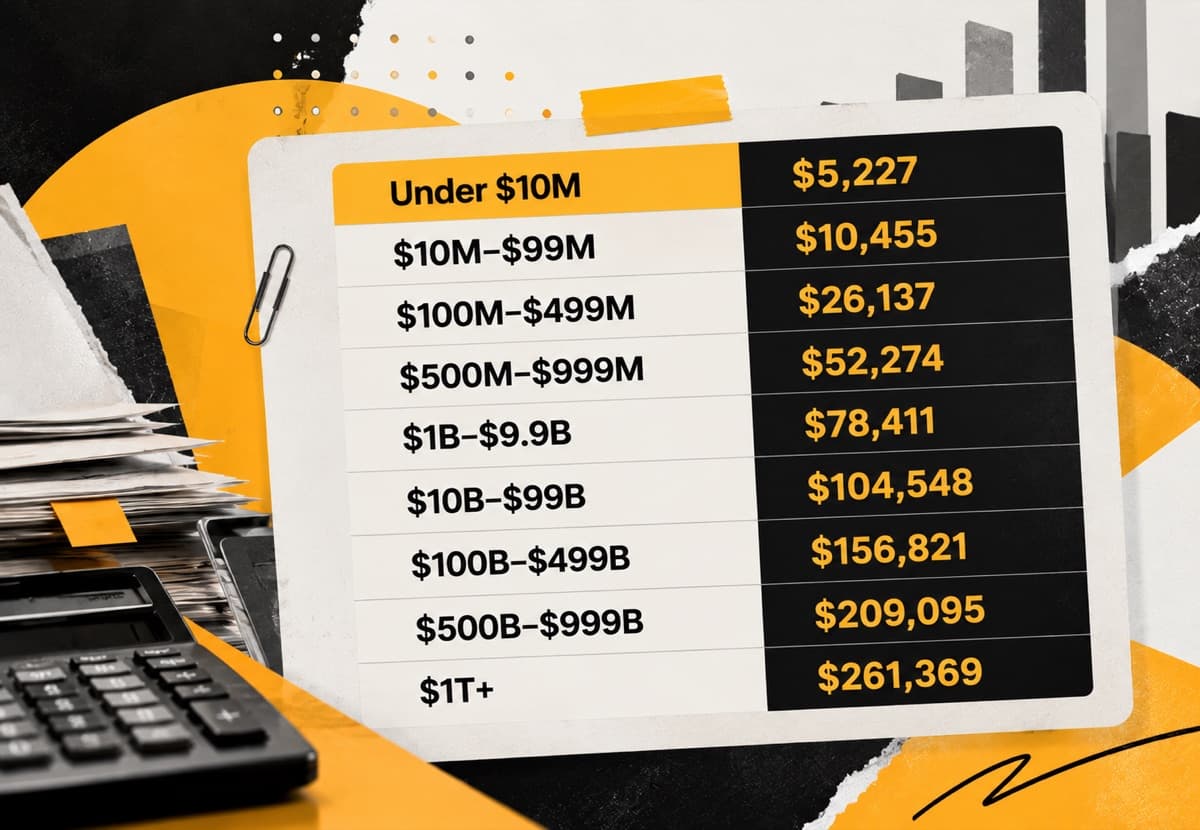
They pay a base amount set by their Canadian assets, and FINTRAC's table runs from $5,227 for assets under $10 million to $261,369 for $1 trillion or more in the 2026–27 year.
Those figures started at $5,000 and $250,000 in the first year and are adjusted each fiscal year for inflation.
Banks also pay a share of the remaining cost on top. Trust and loan companies and life insurers pay only the base amount, unless they also file 500 or more threshold reports.
Is It a Penalty, and When Is It Due?
It isn't a penalty.
An assessment is not an administrative monetary penalty, and it says nothing about what an examination would find. We walked through that in our earlier explainer on FINTRAC's invoices, and the penalty side has its own rules in the AMP framework.
The part that deserves a calendar entry is payment.
FINTRAC's invoice guidance says the total is final, conclusive and binding, due in full on receipt, and a debt owed to the Crown that can be recovered in court. The invoice arrives by email and shows the formula and the data behind it.
Each invoice has two parts: an adjustment for the previous fiscal year, and an interim amount for the current one. FINTRAC builds the interim figure from its forecast costs and your previous year's volume.
It recommends paying by wire transfer in Canadian dollars, and it also accepts cheque and direct deposit.
How Do You See 500 Coming?
- Count by fiscal year, April 1 to March 31, not by calendar year.
- Count the four threshold report types, plus any Ministerial Directive reports, and leave suspicious transaction reports out.
- Pull the count from your own reporting records every quarter, not once a year when the invoice lands.
- If you're past 400 by the middle of the year, tell finance. A new corridor, product or customer segment can move the number quickly.
- Treat the interim amount as a forecast, and check it against the adjustment on the next invoice.
- If your count and FINTRAC's don't match, find out why before the invoice does. An outside effectiveness review is a straightforward way to check that your reports are complete and correct.
Then give the line a place in your budget. Our guide to compliance budgets covers what else belongs next to it.
Picture a Remittance Business in Mississauga
Say a small remittance business files 460 threshold reports in one fiscal year. Nobody at FINTRAC sends it anything. The next year it opens a new payment corridor, and its wire reports climb to 540.
Same compliance team, same program, same quality of work. The invoice arrives anyway, with a formula in it, and the finance lead asks the compliance officer what went wrong. Nothing went wrong. The business got busier.
(This is an invented example, for illustration only.)
FAQ
Does FINTRAC bill every reporting entity?
No. It bills banks, trust and loan companies, and life insurers every year, plus any other reporting entity that files 500 or more threshold reports in a fiscal year.
Do suspicious transaction reports count toward the 500?
No. FINTRAC counts large cash, large virtual currency, electronic funds transfer and casino disbursement reports, and leaves out suspicious transaction reports and listed person or entity property reports.
Are crypto businesses affected?
They can be. Large virtual currency transaction reports count toward the 500, and FINTRAC's first-year list of billed entities included money services businesses and foreign money services businesses.
When does the fiscal year start?
On April 1. FINTRAC's first charging year ran from April 1, 2024 to March 31, 2025.
Can the bill change from one year to the next?
Yes. Charges can move with the annual cost of FINTRAC's supervision program, the Canadian assets of the banks, trust and loan companies and life insurers, and the overall volume of threshold reports.
Who do I ask about my invoice?
FINTRAC's invoice guidance lists a dedicated email address for questions about the funding model and for alternate payment methods.
AML Incubator helps reporting entities check their reporting counts against FINTRAC's rules and explain the invoice to their finance team.