Why Some Crypto Companies Get Banked and Funded, and Others Don't (2026)
Crypto has a trust problem. It didn't earn that reputation alone, but it's stuck with it anyway. A few exchanges collapses. Ugly indictments gets pulled up. And a list of fraud headlines. Because of that, regulators, banks, and investors now look at almost any crypto business the same way: prove you're not the next one. It doesn't matter how fair that is. This is just the reality for crypto businesses in Canada right now. We work inside that reality every day at AMLI. So when we talk about "ethical compliance," we mean the real work behind it: the paperwork, the documentation, the slow proof that a business is legitimate. That proof is what decides whether a business gets banked, funded, or licensed. This is what that work actually looks like, and why it matters more in crypto than almost anywhere else.
The Truth About Crypto's Reputation
Bad actors move fast while regulators move slower, but they have long memories.
Every high-profile collapse makes the whole industry look suspicious. So when a legitimate business applies for a bank account, pitches an investor, or registers with FINTRAC, it's often starting several steps behind. That has nothing to do with its own track record.
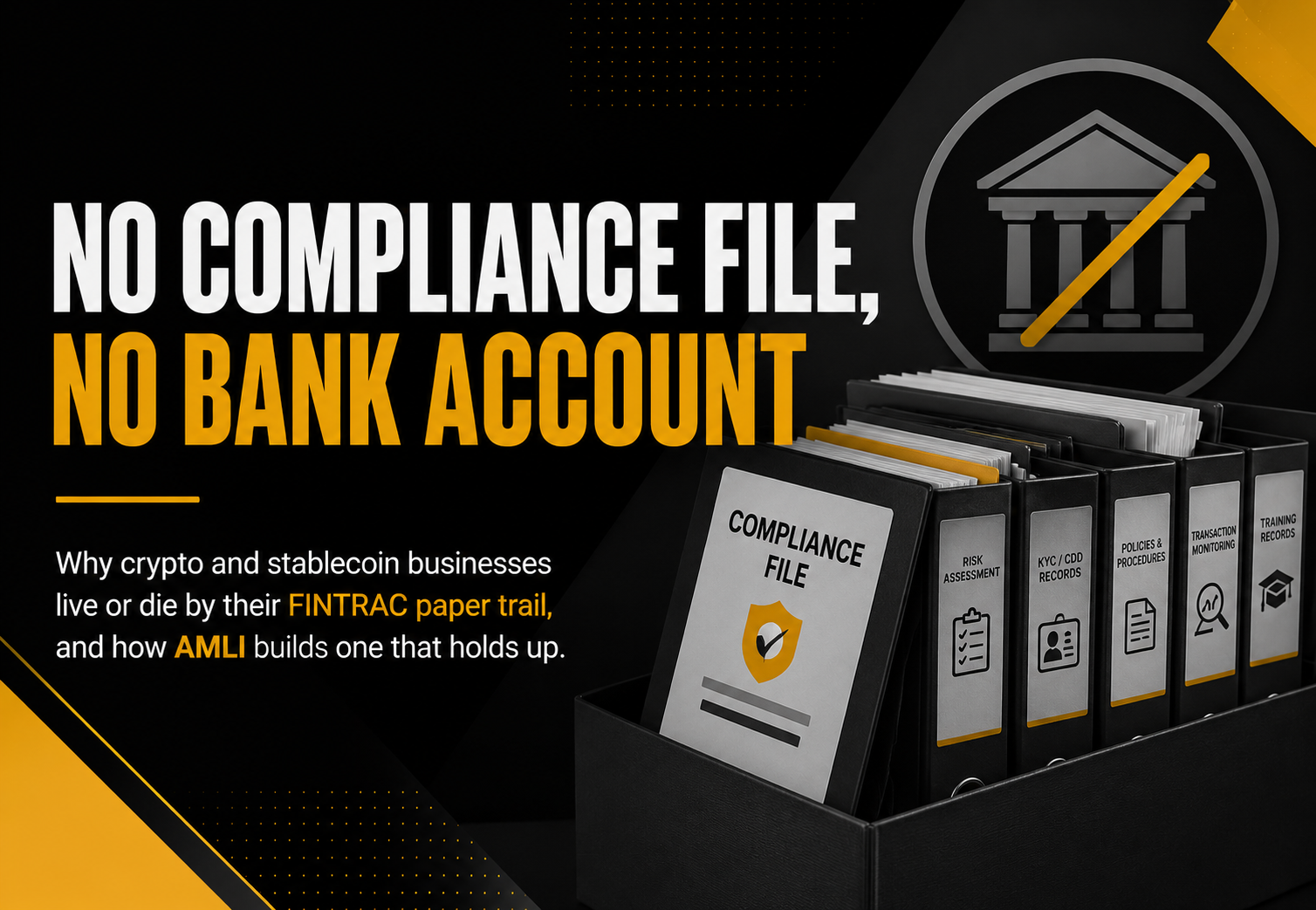
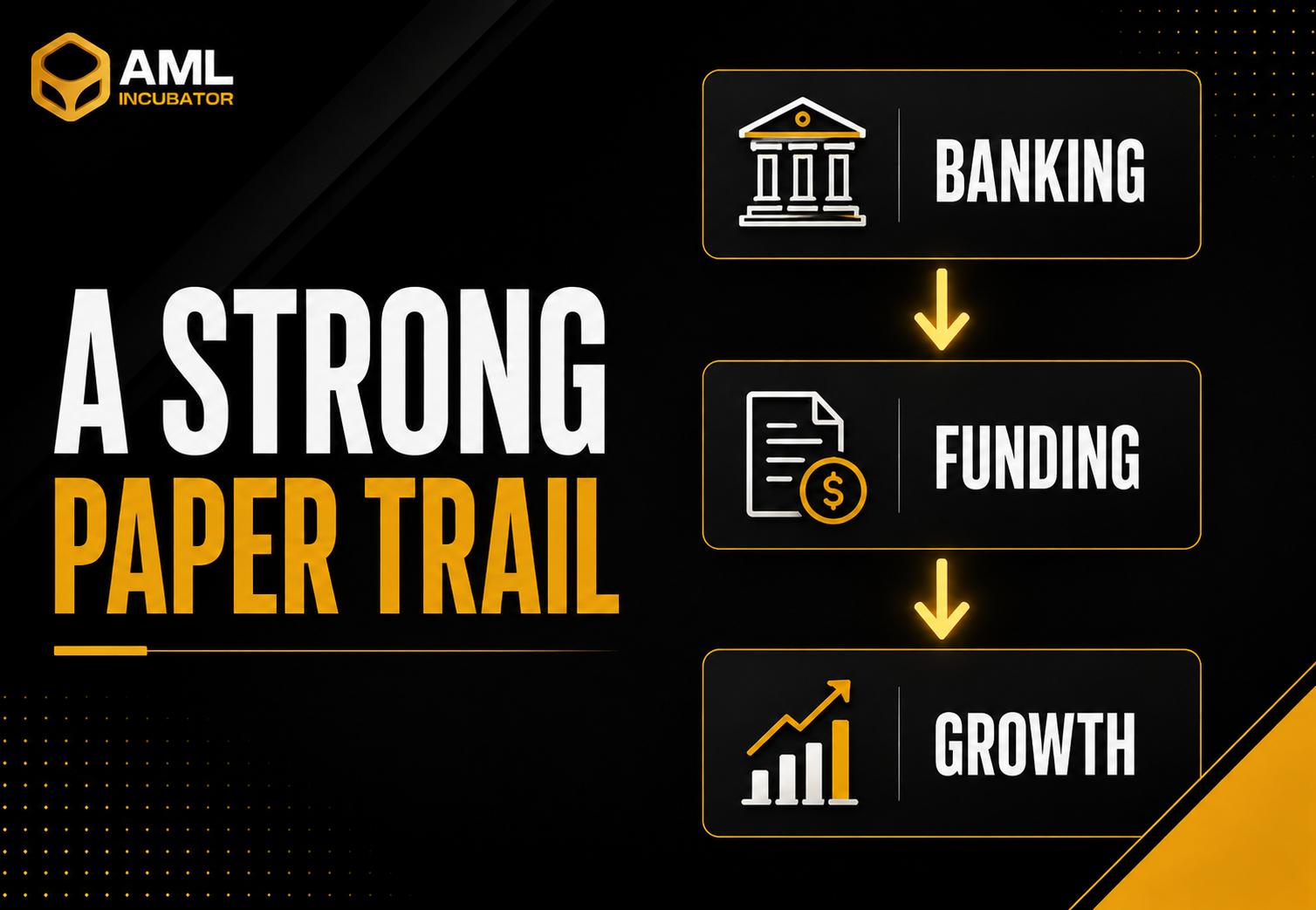
You NEED a paper trail here.
What FINTRAC Expects, and Why Most Founders Get Surprised
FINTRAC is short for the Financial Transactions and Reports Analysis Centre of Canada. It's the federal regulator that oversees money laundering and terrorist financing rules in Canada.
Since June 2020, dealing in crypto has counted as a "money services business," or MSB, under the Proceeds of Crime (Money Laundering) and Terrorist Financing Act. In plain terms: if a business exchanges, transfers, or moves crypto for other people, it counts. Being "just a small platform" doesn't get you out of it. Neither does "we're still figuring out the regulatory side."
That status comes with real obligations.
These are the main ones:
-
Register with FINTRAC as an MSB. This includes disclosing who actually owns and controls the business. Current guidance is posted on the FINTRAC website, and it changes more often than most people check.
-
Put a written compliance program in place, with one named person responsible for it. Not a title that sits empty on an org chart.
-
Verify who your clients are (this is called "know-your-client," or KYC), with extra checks for anyone who looks higher risk.
-
Follow the Travel Rule. This means sender and receiver information has to travel along with transactions above a certain size.
-
File reports when required. That covers suspicious transactions, large virtual currency transactions, and terrorist property, depending on what comes up.
Enforcement in this sector has followed the same pattern as the rest of the MSB world.
Think Crypto Gets a Pass on Penalties?
It doesn’t.
A lot of people in this industry assume crypto gets treated more gently, or that enforcement hasn't caught up yet. It has.
FINTRAC uses the same penalty structure for a non-compliant crypto business as it does for any other unregistered MSB.
A few facts worth knowing:
- Very serious violations can carry penalties up to $500,000 per violation for a business.
- Criminal charges under the PCMLTFA can mean fines up to $2,000,000 and five years in prison.
- FINTRAC also keeps a public list of penalties online, and it stays there indefinitely.
- That list is often the first thing a bank's compliance team finds when they search a company's name.
Crypto carries one more risk on top of that.
When one crypto business gets an enforcement action, it tends to make headlines across the whole industry. Banks and payment processors read those headlines and get stricter with every crypto client on their books, even the ones who did nothing wrong.
What Separates "Compliant on Paper" From Actually Trustworthy?
Plenty of companies say compliance is a priority. Fewer can prove it when someone actually checks.
But..
It means flagging problems early.
Telling FINTRAC and financial partners about a gap before an examiner or a journalist finds it first.
It means documentation that holds up.
Every client file, risk assessment, and reporting decision needs a clear trail. Because a bank, an investor, or a future buyer eventually will ask.
It means the program actually gets used, not just written down.
If the day-to-day work doesn't match the policy, and staff were never really trained on it, the policy is just paper.
It means an ongoing relationship with the regulator.
FINTRAC treats businesses that catch and fix their own problems very differently from businesses that only comply once they're forced to.
How AMLI's Reputation Got Built in an Industry Built on Distrust
Here's the part most compliance write-ups skip: what does "ethical compliance" actually mean when you strip out the buzzwords?
For AMLI, it comes down to two things: transparency and accountability, treated as daily habits instead of talking points.
Transparency shows up in small, unglamorous ways. It means telling a client the truth about their gaps, even when the easier answer would keep the invoice moving. It means giving regulators a straight answer instead of a carefully worded one. It means building documentation that a client could hand to a bank, an auditor, or a new investor without needing to explain anything away first. A lot of firms in this space sell reassurance. AMLI sells evidence, because in an industry full of skepticism, evidence is the only thing that actually moves a decision.
Accountability works the same way. It means AMLI's compliance officers don't disappear once a program is built. It means program design comes with someone actually responsible for whether it holds up under a real FINTRAC exam, not just whether it looks good in a slide deck. It means clients get told directly when a shortcut isn't worth the risk, even if that's not what they wanted to hear.
All of that is rare in a market where a lot of "compliance consulting" is really just paperwork-for-hire. Crypto founders who've been burned by a checkbox compliance provider, one that filed the registration and disappeared, tend to notice the difference fast. So do the banks and investors evaluating a business from the outside.
A compliance partner with a reputation for straight answers becomes part of the trust signal itself. That reputation is exactly why crypto and stablecoin businesses come to AMLI when they need a program that has to survive contact with a real examiner, a real due diligence team, or a real crisis, not just a real invoice.
The Reason This Matters Has Nothing to Do With FINTRAC
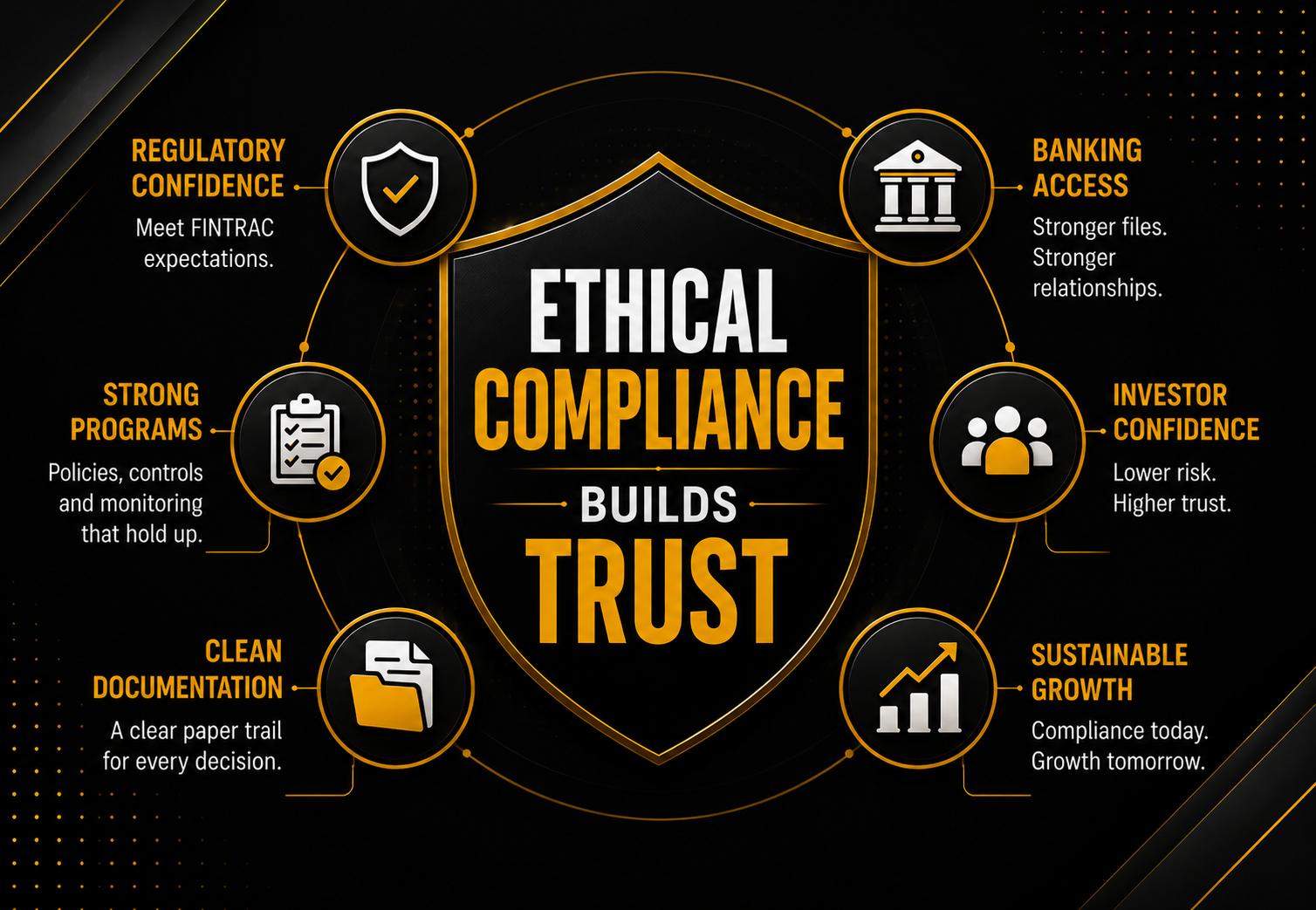
A strong compliance file does more than satisfy a regulator. Banks, investors, and partners lean on it too, and none of them take a business's word for it.
Banks won't open an account, or won't keep one, for a crypto business that can't show a clean compliance history on request. Investors doing due diligence treat a documented AML program as a real factor in deal terms. Payment and exchange partners increasingly ask for proof of active FINTRAC registration before they'll even start talking about integration.
Trust is hard to come by in this industry. A compliance record that actually holds up is one of the few things that turns directly into real business value: a bank account, a funding round, a partnership.
So Where Does That Leave You?
Crypto businesses don't get an exemption from the law. They don't get a discount because some other company in the space made headlines for the wrong reasons. If anything, the bar sits higher for them.
Doing the bare legal minimum quietly doesn't hold up once a bank, an investor, or FINTRAC starts asking hard questions. Building a real program, with a paper trail to back it up, does. The businesses still standing in five years will mostly be the ones that treated compliance as worth building early, not something to patch together after a warning letter shows up.
How AML Incubator Supports Crypto and Stablecoin Businesses
AML Incubator works with stablecoin issuers, crypto platforms, and fintechs to build compliance programs that hold up under regulatory scrutiny, not just on paper.
If your compliance program is still built around the assumptions that applied a year ago, this is the moment to change that, before an examiner changes it for you.