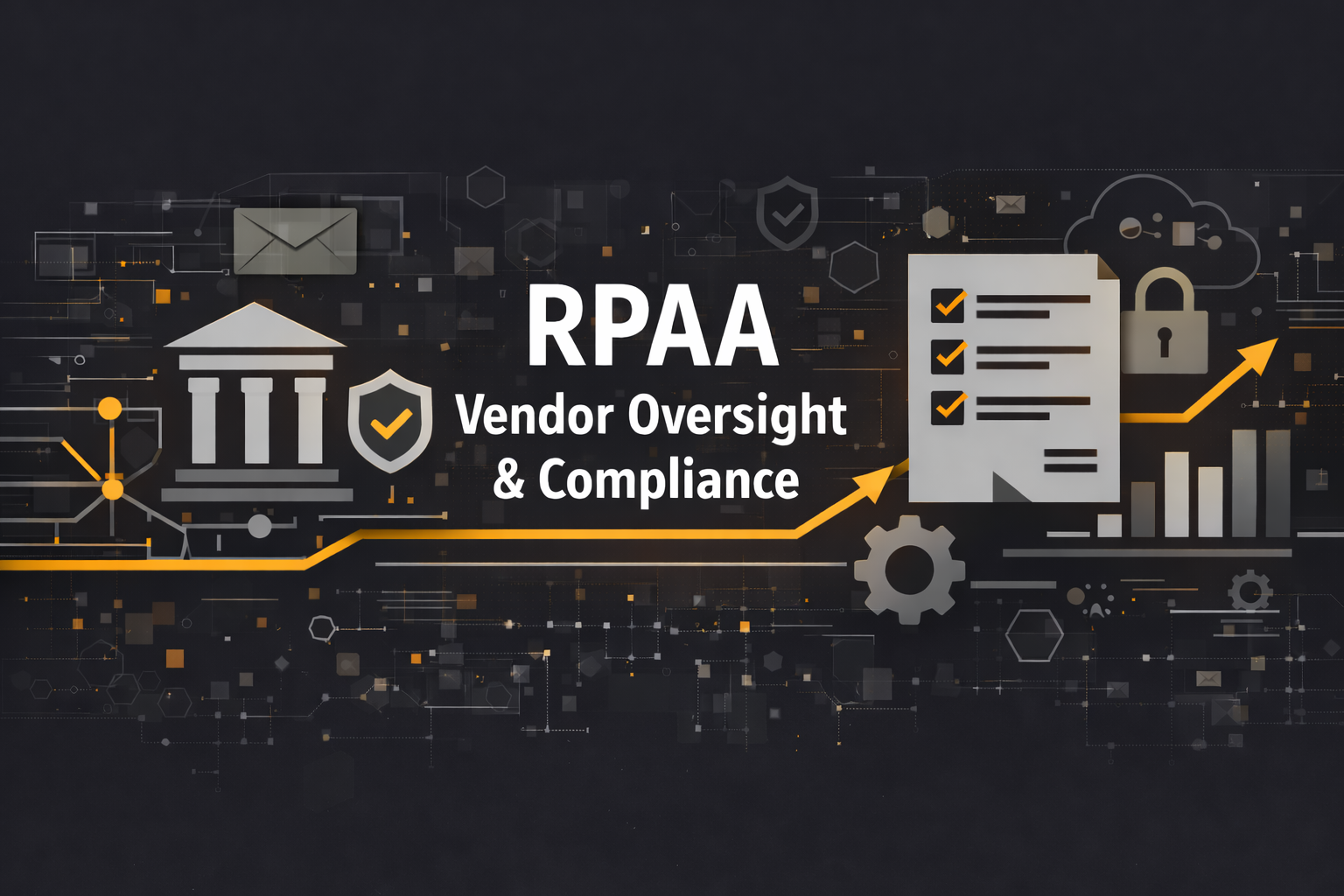
Third-Party Service Providers under RPAA: Vendor Oversight, Operational Rist, and Incident Response
Modern payment stacks rely heavily on third-party providers for core components, including cloud infrastructure, fraud detection tools, ledgering, settlement, and customer support. Under Canada’s 𝐑𝐞𝐭𝐚𝐢𝐥 𝐏𝐚𝐲𝐦𝐞𝐧𝐭 𝐀𝐜𝐭𝐢𝐯𝐢𝐭𝐢𝐞𝐬 𝐀𝐜𝐭 (𝐑𝐏𝐀𝐀) and the 𝐑𝐞𝐭𝐚𝐢𝐥 𝐏𝐚𝐲𝐦𝐞𝐧𝐭 𝐀𝐜𝐭𝐢𝐯𝐢𝐭𝐢𝐞𝐬 𝐑𝐞𝐠𝐮𝐥𝐚𝐭𝐢𝐨𝐧𝐬 (𝐑𝐏𝐀𝐑), outsourcing does not shift accountability away from the Payment Service Provider (PSP). PSPs are expected to demonstrate effective vendor oversight, operational risk controls, and incident response capability, even when key activities are delivered by third parties.
𝐖𝐡𝐲 𝐏𝐒𝐏𝐬 𝐒𝐞𝐚𝐫𝐜𝐡 𝐟𝐨𝐫 𝐓𝐡𝐢𝐫𝐝-𝐏𝐚𝐫𝐭𝐲 𝐒𝐮𝐩𝐩𝐨𝐫𝐭 𝐢𝐧 𝐑𝐏𝐀𝐀 𝐂𝐨𝐦𝐩𝐥𝐢𝐚𝐧𝐜𝐞
Most PSPs cannot operate without vendors. Identity providers, cloud platforms, fraud tooling, ledger systems, processors, and customer support platforms often sit inside the systems and data pathways that determine whether retail payment activities run reliably.
This is why the practical compliance question is rarely “can we outsource?” The question is whether the PSP can demonstrate that outsourced dependencies are governed, assessed, monitored, and integrated into incident response in a way that holds up during supervisory review.
AMLI Analysis: The common failure mode is lack of evidence. The PSP cannot show how vendor-controlled reality matches policy claims, contract terms, and operational practice.
Scope confusion is common, especially for early-stage fintechs with vendor-heavy stacks.
At a high level:
- A PSP with a place of business in Canada is subject to the RPAA for retail payment activities.
- The RPAA can also apply to certain PSPs outside Canada when they perform retail payment activities for an end user in Canada and direct those activities at individuals or entities in Canada.
AMLI Analysis: Selecting and integrating vendors before confirming scope often leads to avoidable retrofit work. Once RPAA applicability is confirmed, PSPs frequently need to go back and formalize vendor oversight, assemble evidence, and operationalize incident response across already-live dependencies.
𝐖𝐡𝐚𝐭 𝐑𝐏𝐀𝐑 𝐑𝐞𝐪𝐮𝐢𝐫𝐞𝐬 𝐖𝐡𝐞𝐧 𝐘𝐨𝐮 𝐔𝐬𝐞 𝐓𝐡𝐢𝐫𝐝 𝐏𝐚𝐫𝐭𝐢𝐞𝐬
If a PSP receives third-party services related to a payment function, the PSP’s written risk management and incident response framework must include an approach to third-party assessment, monitoring, notifications, responsibility allocation, and recordkeeping.
In practical terms, this usually means the framework clearly describes:
- how third parties are assessed
- what is monitored and how often
- how incidents and disruptions are communicated
- how responsibilities are allocated between PSP and vendor
- how evidence is retained so it can be produced during review
AMLI Analysis: The requirement is to operate a vendor oversight system that produces evidence on demand.
𝐖𝐡𝐚𝐭 𝐂𝐨𝐮𝐧𝐭𝐬 𝐚𝐬 𝐚 “𝐒𝐞𝐫𝐯𝐢𝐜𝐞 𝐑𝐞𝐥𝐚𝐭𝐞𝐝 𝐭𝐨 𝐚 𝐏𝐚𝐲𝐦𝐞𝐧𝐭 𝐅𝐮𝐧𝐜𝐭𝐢𝐨𝐧” (𝐢𝐧 𝐏𝐥𝐚𝐢𝐧 𝐄𝐧𝐠𝐥𝐢𝐬𝐡)?
A practical way to interpret “service related to a payment function” is operational dependence.
If the vendor’s service affects any of the following, it usually belongs inside the PSP’s vendor oversight scope:
- availability of systems used for retail payment activities
- integrity of transaction state, records, or reconciliation
- confidentiality, integrity, or availability of PSP data and information
- security of connections into the PSP environment
- the PSP’s ability to detect, respond to, and recover from incidents
𝐖𝐡𝐚𝐭 𝐓𝐡𝐢𝐫𝐝-𝐏𝐚𝐫𝐭𝐲 𝐏𝐫𝐨𝐯𝐢𝐝𝐞𝐫𝐬 𝐀𝐜𝐭𝐮𝐚𝐥𝐥𝐲 𝐃𝐨: 𝐕𝐞𝐧𝐝𝐨𝐫 𝐑𝐨𝐥𝐞𝐬 𝐌𝐚𝐩𝐩𝐞𝐝 𝐭𝐨 𝐑𝐏𝐀𝐑 𝐎𝐯𝐞𝐫𝐬𝐢𝐠𝐡𝐭
Connecting vendor governance to the vendor's actual role in the payment stack simplifies the process.
-
𝐂𝐥𝐨𝐮𝐝, 𝐇𝐨𝐬𝐭𝐢𝐧𝐠, 𝐚𝐧𝐝 𝐈𝐧𝐟𝐫𝐚𝐬𝐭𝐫𝐮𝐜𝐭𝐮𝐫𝐞
What they support: system availability, data storage, logging, and access control.
What oversight must cover: data protection, connection security, monitoring, breach/disruption notifications, and change consultation.
Evidence examples: access reviews, logging coverage statements, outage history, incident postmortems, and change notices.
-
𝐏𝐚𝐲𝐦𝐞𝐧𝐭 𝐏𝐫𝐨𝐜𝐞𝐬𝐬𝐨𝐫𝐬, 𝐑𝐚𝐢𝐥 𝐈𝐧𝐭𝐞𝐠𝐫𝐚𝐭𝐨𝐫𝐬, 𝐚𝐧𝐝 𝐓𝐞𝐜𝐡𝐧𝐢𝐜𝐚𝐥 𝐒𝐞𝐫𝐯𝐢𝐜𝐞 𝐏𝐫𝐨𝐯𝐢𝐝𝐞𝐫𝐬
What they support: transaction routing, message handling, and settlement dependencies.
What oversight must cover: performance monitoring, disruption notifications, and change consultation before impactful changes.
Evidence examples: uptime metrics, escalation paths, and change rollback procedures.
-
𝐅𝐫𝐚𝐮𝐝, 𝐈𝐝𝐞𝐧𝐭𝐢𝐭𝐲, 𝐚𝐧𝐝 𝐒𝐞𝐜𝐮𝐫𝐢𝐭𝐲 𝐓𝐨𝐨𝐥𝐢𝐧𝐠
What they support: anomaly detection, account takeover controls, and identity proofing signals.
What oversight must cover: monitoring, incident/breach notifications, and responsibility allocation for escalation and decisioning.
Evidence examples: alert handling procedures, threshold governance, and escalation records.
-
𝐋𝐞𝐝𝐠𝐞𝐫, 𝐑𝐞𝐜𝐨𝐧𝐜𝐢𝐥𝐢𝐚𝐭𝐢𝐨𝐧, 𝐚𝐧𝐝 𝐑𝐞𝐩𝐨𝐫𝐭𝐢𝐧𝐠 𝐒𝐲𝐬𝐭𝐞𝐦𝐬
What they support: transaction integrity, reconciliation, exception handling, and audit trails.
What oversight must cover: data integrity controls, monitoring, incident coordination, and safeguarding impacts where end-user funds are held.
Evidence examples: reconciliation logs, exception queue governance, sign-offs, and audit trails.
AMLI Analysis: Vendor oversight is strongest when each critical control has a named owner on the PSP side. That ownership ensures controls are actually run, reviewed, and evidenced, rather than assumed to be handled by the vendor.
𝐖𝐡𝐚𝐭 𝐑𝐏𝐀𝐀 𝐕𝐞𝐧𝐝𝐨𝐫 𝐎𝐯𝐞𝐫𝐬𝐢𝐠𝐡𝐭 𝐌𝐞𝐚𝐧𝐬 𝐢𝐧 𝐏𝐫𝐚𝐜𝐭𝐢𝐜𝐞
Many PSPs treat vendor oversight as procurement work. Supervisory review treats it as control effectiveness.
In operational terms, being vendor-ready means you can show:
- which vendors support which payment functions, and which are critical
- what risks each vendor introduces to availability, security, and incident response
- what controls exist to manage those risks
- how incidents and changes are handled end-to-end, including coordination with the vendor
- what proof exists that oversight runs continuously, not only on paper
AMLI Analysis: Supervisory questions tend to be direct. Who owns this dependency? How do you know it is working? What happens when it fails?
𝐑𝐞𝐯𝐢𝐞𝐰-𝐑𝐞𝐚𝐝𝐲 𝐄𝐯𝐢𝐝𝐞𝐧𝐜𝐞
The goal is to maintain a coherent evidence set that ties vendor oversight to how the PSP actually operates. It should be easy to update and retrieve, and it should be consistent across vendor types.
𝐄𝐱𝐚𝐦𝐩𝐥𝐞 𝟏: 𝐂𝐥𝐨𝐮𝐝 𝐏𝐫𝐨𝐯𝐢𝐝𝐞𝐫 (infrastructure-critical)
A typical evidence set includes:
- vendor inventory entry mapped to payment functions and criticality
- annual assessment record with date, scope, findings, and remediation tracking
- data protection evidence (access reviews, encryption posture summary, logging coverage summary)
- connection security evidence (authentication approach, network boundary controls)
- change control evidence (change notices, consultation triggers, approval triggers)
- incident coordination evidence (incident comms log or tabletop output for a vendor outage scenario)
𝐄𝐱𝐚𝐦𝐩𝐥𝐞 𝟐: 𝐏𝐚𝐲𝐦𝐞𝐧𝐭 𝐏𝐫𝐨𝐜𝐞𝐬𝐬𝐨𝐫 𝐨𝐫 𝐑𝐚𝐢𝐥 𝐈𝐧𝐭𝐞𝐠𝐫𝐚𝐭𝐨𝐫 (transaction-path critical)
A typical evidence set includes:
- vendor inventory entry mapped to specific flows and payment functions
- assessment record plus a reassessment trigger when contract scope materially changes
- performance monitoring evidence (uptime reporting, disruption notifications, escalation channels)
- change control evidence (release notes, integration change notices, rollback expectations)
- incident response evidence (incident declaration process, shared comms plan, escalation timeline)
- transaction integrity evidence (reconciliation linkages, exception ownership, post-incident integrity checks)
AMLI Analysis: Most PSPs can gather these items. The differentiator is whether they are maintained in a consistent format, tied to named owners, and aligned to actual operations.
𝐒𝐮𝐩𝐞𝐫𝐯𝐢𝐬𝐨𝐫𝐲 𝐑𝐞𝐯𝐢𝐞𝐰: 𝐀 𝐒𝐡𝐨𝐫𝐭 𝐐𝐮𝐞𝐬𝐭𝐢𝐨𝐧 𝐒𝐞𝐭 𝐏𝐒𝐏𝐬 𝐒𝐡𝐨𝐮𝐥𝐝 𝐁𝐞 𝐑𝐞𝐚𝐝𝐲 𝐭𝐨 𝐀𝐧𝐬𝐰𝐞𝐫
Use this as a self-check during readiness work:
- Show your vendor inventory and identify which vendors are critical, along with a rationale.
- Provide your most recent assessment record for a critical vendor, including findings and remediation.
- Show an example of a vendor change notification and how you evaluated the impact.
- Show an incident record where a vendor dependency was involved, including escalation and communications.
- Show how evidence is stored and how quickly it can be produced.
AMLI Analysis: These questions expose where policies and contracts do not match day-to-day workflows.
𝐇𝐨𝐰 𝐭𝐨 𝐃𝐞𝐟𝐢𝐧𝐞 “𝐂𝐫𝐢𝐭𝐢𝐜𝐚𝐥 𝐕𝐞𝐧𝐝𝐨𝐫𝐬” 𝐢𝐧 𝐎𝐩𝐞𝐫𝐚𝐭𝐢𝐨𝐧𝐚𝐥 𝐓𝐞𝐫𝐦𝐬
A repeatable method PSPs use to identify critical vendors includes:
- end-user impact if the vendor fails (availability, payment completion, access to funds)
- replaceability (time and feasibility to switch, or to degrade safely)
- data sensitivity and access level
- whether the vendor touches payment execution or transaction state
- concentration risk (single point of failure, dependency chaining)
- change frequency and operational complexity (more change increases oversight demand)
AMLI Analysis: “Critical vendor” should be defensible in writing. PSPs should be able to explain why a vendor is or is not critical using consistent criteria.
𝐒𝐚𝐟𝐞𝐠𝐮𝐚𝐫𝐝𝐢𝐧𝐠 𝐄𝐧𝐝-𝐔𝐬𝐞𝐫 𝐅𝐮𝐧𝐝𝐬: 𝐖𝐡𝐞𝐫𝐞 𝐕𝐞𝐧𝐝𝐨𝐫𝐬 𝐇𝐞𝐥𝐩, 𝐚𝐧𝐝 𝐖𝐡𝐞𝐫𝐞 𝐓𝐡𝐞𝐲 𝐂𝐚𝐧𝐧𝐨𝐭
Safeguarding expectations apply to PSPs that have obligations to safeguard end-user funds and, in particular, to PSPs that perform the payment function of holding funds on behalf of an end user until withdrawal or transfer.
Where third parties help:
- safeguarding account structures through financial institution partners
- ledgering and reconciliation tooling
- monitoring and exception management systems
Where third parties cannot replace PSP accountability:
- the PSP must be able to evidence how safeguarding is implemented, monitored, and governed, including how discrepancies are detected, escalated, and resolved
𝐀 𝐌𝐢𝐧𝐢 𝐎𝐩𝐞𝐫𝐚𝐭𝐢𝐨𝐧𝐚𝐥 𝐏𝐥𝐚𝐲𝐛𝐨𝐨𝐤 𝐟𝐨𝐫 𝐒𝐚𝐟𝐞𝐠𝐮𝐚𝐫𝐝𝐢𝐧𝐠 (week-to-week)
- reconciliation cadence: daily or next-business-day with defined cut-off times
- exception ownership: named owner for breaks, with escalation thresholds and deadlines
- approval and sign-off: defined reviewer, with records retained
- break resolution discipline: documented steps, investigation notes, closure evidence
- evidence retention: consistent storage of logs, exceptions, approvals, remediation actions
AMLI Analysis: Safeguarding failures are usually process failures. Reconciliation delays, unresolved exceptions, and unclear approvals become visible quickly when volumes grow.
𝐖𝐡𝐚𝐭 𝐏𝐚𝐩𝐞𝐫𝐰𝐨𝐫𝐤 𝐃𝐨 𝐖𝐞 𝐍𝐞𝐞𝐝 𝐟𝐨𝐫 𝐑𝐏𝐀𝐀 𝐕𝐞𝐧𝐝𝐨𝐫 𝐂𝐨𝐦𝐩𝐥𝐢𝐚𝐧𝐜𝐞?
Think in terms of an evidence set that maps cleanly to the RPAR.
Minimum set:
- vendor inventory mapped to payment functions and criticality
- assessment records with date, scope, findings, and remediation tracking
- responsibility allocation matrix (data ownership, integrity, confidentiality, availability)
- change management process and examples of vendor change notifications
- monitoring metrics and disruption records, including escalation evidence
- incident records showing coordination, reporting, and evidence retention
AMLI Analysis: The strongest signal is consistency. Contracts, operating procedures, and incident records should tell the same story.
𝐈𝐦𝐩𝐥𝐢𝐜𝐚𝐭𝐢𝐨𝐧𝐬 𝐚𝐬 𝐂𝐨𝐦𝐩𝐥𝐞𝐱𝐢𝐭𝐲 𝐆𝐫𝐨𝐰𝐬: 𝐕𝐞𝐧𝐝𝐨𝐫 𝐂𝐡𝐚𝐢𝐧𝐬, 𝐅𝐨𝐮𝐫𝐭𝐡 𝐏𝐚𝐫𝐭𝐢𝐞𝐬, 𝐚𝐧𝐝 𝐄𝐯𝐢𝐝𝐞𝐧𝐜𝐞 𝐃𝐫𝐢𝐟𝐭
As PSPs scale, vendor oversight becomes harder for three common reasons:
- vendors change faster, and change control becomes a continuous requirement
- vendor chains grow, meaning critical services rely on subcontractors and embedded providers
- evidence drifts, meaning controls exist but operational proof and recordkeeping fall behind
AMLI Analysis: At scale, the oversight challenge is governance discipline. Processes need owners, triggers, and repeatable evidence outputs.
𝐏𝐫𝐚𝐜𝐭𝐢𝐜𝐚𝐥 𝐒𝐭𝐞𝐩𝐬 𝐭𝐨 𝐒𝐭𝐫𝐞𝐧𝐠𝐭𝐡𝐞𝐧 𝐓𝐡𝐢𝐫𝐝-𝐏𝐚𝐫𝐭𝐲 𝐎𝐯𝐞𝐫𝐬𝐢𝐠𝐡𝐭 𝐔𝐧𝐝𝐞𝐫 𝐑𝐏𝐀𝐑
A practical baseline approach:
- map vendors to payment functions and define criticality using a documented rubric
- use an RPAR-aligned assessment template and retain dated records
- define change triggers so reassessment happens when scope or risk changes, not only on a calendar
- integrate vendors into incident response playbooks, escalation paths, and recordkeeping
- test at least one vendor-driven incident scenario per year and retain the result as evidence
𝐅𝐫𝐞𝐪𝐮𝐞𝐧𝐭𝐥𝐲 𝐀𝐬𝐤𝐞𝐝 𝐐𝐮𝐞𝐬𝐭𝐢𝐨𝐧𝐬
Q: 𝐖𝐡𝐞𝐧 𝐢𝐬 𝐭𝐡𝐞 𝐟𝐢𝐫𝐬𝐭 𝐚𝐧𝐧𝐮𝐚𝐥 𝐫𝐞𝐩𝐨𝐫𝐭 𝐝𝐮𝐞 𝐟𝐨𝐫 𝐑𝐞𝐭𝐚𝐢𝐥 𝐏𝐚𝐲𝐦𝐞𝐧𝐭𝐬 𝐒𝐮𝐩𝐞𝐫𝐯𝐢𝐬𝐢𝐨𝐧?
A: The Bank of Canada’s RPAA FAQ states the first annual report is due by March 31, 2026, as prescribed in the regulations.
Q: 𝐈𝐬 𝐚 𝐯𝐞𝐧𝐝𝐨𝐫 𝐪𝐮𝐞𝐬𝐭𝐢𝐨𝐧𝐧𝐚𝐢𝐫𝐞 𝐞𝐧𝐨𝐮𝐠𝐡?
A: Usually not. The RPAR expects assessment records with findings and responsibility allocation. Operational risk guidance also emphasizes effective outcomes and testing. A questionnaire can support an assessment but rarely proves operational effectiveness on its own.
Q: 𝐃𝐨 𝐫𝐞𝐠𝐮𝐥𝐚𝐭𝐨𝐫𝐬 𝐫𝐞𝐪𝐮𝐢𝐫𝐞 𝐒𝐎𝐂 𝟐 𝐨𝐫 𝐈𝐒𝐎 𝟐𝟕𝟎𝟎𝟏?
A: The supervisory focus is effectiveness and evidence. Assurance reports can support control but do not replace PSP oversight, monitoring, and responsibility allocation.
Q: 𝐃𝐨𝐞𝐬 𝐑𝐏𝐀𝐀 𝐚𝐩𝐩𝐥𝐲 𝐭𝐨 𝐟𝐢𝐧𝐭𝐞𝐜𝐡𝐬 𝐭𝐡𝐚𝐭 𝐝𝐨 𝐧𝐨𝐭 𝐡𝐨𝐥𝐝 𝐞𝐧𝐝-𝐮𝐬𝐞𝐫 𝐟𝐮𝐧𝐝𝐬?
A: It can. Scope depends on whether the PSP performs retail payment activities in scope. Safeguarding obligations are specifically relevant when the PSP performs the payment function of holding funds on behalf of an end user.
Q: 𝐃𝐨 𝐬𝐮𝐛𝐜𝐨𝐧𝐭𝐫𝐚𝐜𝐭𝐨𝐫𝐬 𝐚𝐧𝐝 fourth parties matter?
A: Yes, in practice. If a critical vendor relies on subcontractors that affect security, availability, or transaction integrity, the PSP should be prepared to evidence how that dependency is understood and managed through contracting, monitoring, and incident coordination.
𝐆𝐞𝐭𝐭𝐢𝐧𝐠 𝐒𝐮𝐩𝐩𝐨𝐫𝐭
AML Incubator supports PSPs through:
- RPAA Registration and Implementation Support (risk management framework, incident response, safeguarding, and RPAR-aligned third-party oversight)
- Fractional CRO Support (ongoing governance ownership, oversight cadence, evidence maintenance, and readiness for supervisory review)
- Vendor Oversight and Evidence Set Build-Out (vendor inventory mapping, criticality rubric, assessment templates, change triggers, incident coordination, and review-ready documentation)
AMLI can review your vendor inventory, map it to RPAR expectations, and structure a practical evidence set that is maintainable in daily operations. This is often where PSPs gain speed, because oversight becomes standardized rather than rebuilt for each review.