The Board's Role in AML Risk Isn't a Rubber Stamp Anymore
Ask a board member what their organization's AML program actually does day to day, and watch what happens. Most can tell you it exists. Fewer can tell you what it's supposed to catch, what it's currently missing, or what happens the week after a regulator shows up and doesn't like what they find. That used to be fine. A board could nod along to an annual risk assessment, ask one polite question, and move on to the next agenda item. Not anymore.
FINTRAC, FinCEN, AUSTRAC, and every major regulator watching money laundering, terrorist financing, and proliferation financing risk have quietly rewritten the rules. The MLRO still runs the program. The board now owns the outcome.
Here's what it actually means for the people sitting at the table.
Why This Landed on the Board's Desk
For years, AML was filed under "operations." Something the compliance team handled, the board rubber-stamped, and everyone else ignored until an audit came up. That worked when financial crime was simpler and enforcement was rarer.
It doesn't work now.
Cross-border sanctions evasion, crypto-enabled laundering, and fraud that moves faster than a quarterly report can catch it have made financial crime a strategic risk. And strategic risks belong at the top of the org chart, whether the board wants them there or not.
However, the fallout from a failed AML program rarely stays a compliance problem. A serious control failure can cost a business its registration, its banking relationships, and its ability to operate in a given market, sometimes overnight. Add in the reputational hit, the legal bills, and the multi-year remediation project that follows, and you've got a board-level crisis wearing a compliance costume.
Regulators know this. That's why thematic reviews, enforcement guidance, and penalty structures increasingly ask a very specific question: what did the board know, and when did they know it?
What "Owning" AML Risk Actually Looks Like for a Director
Here's where a lot of boards get confused. Owning AML risk doesn't mean directors need to understand transaction monitoring rules or memorize the Proceeds of Crime (Money Laundering) and Terrorist Financing Act. That's what the Money Laundering Reporting Officer, or MLRO, and the compliance team are for.
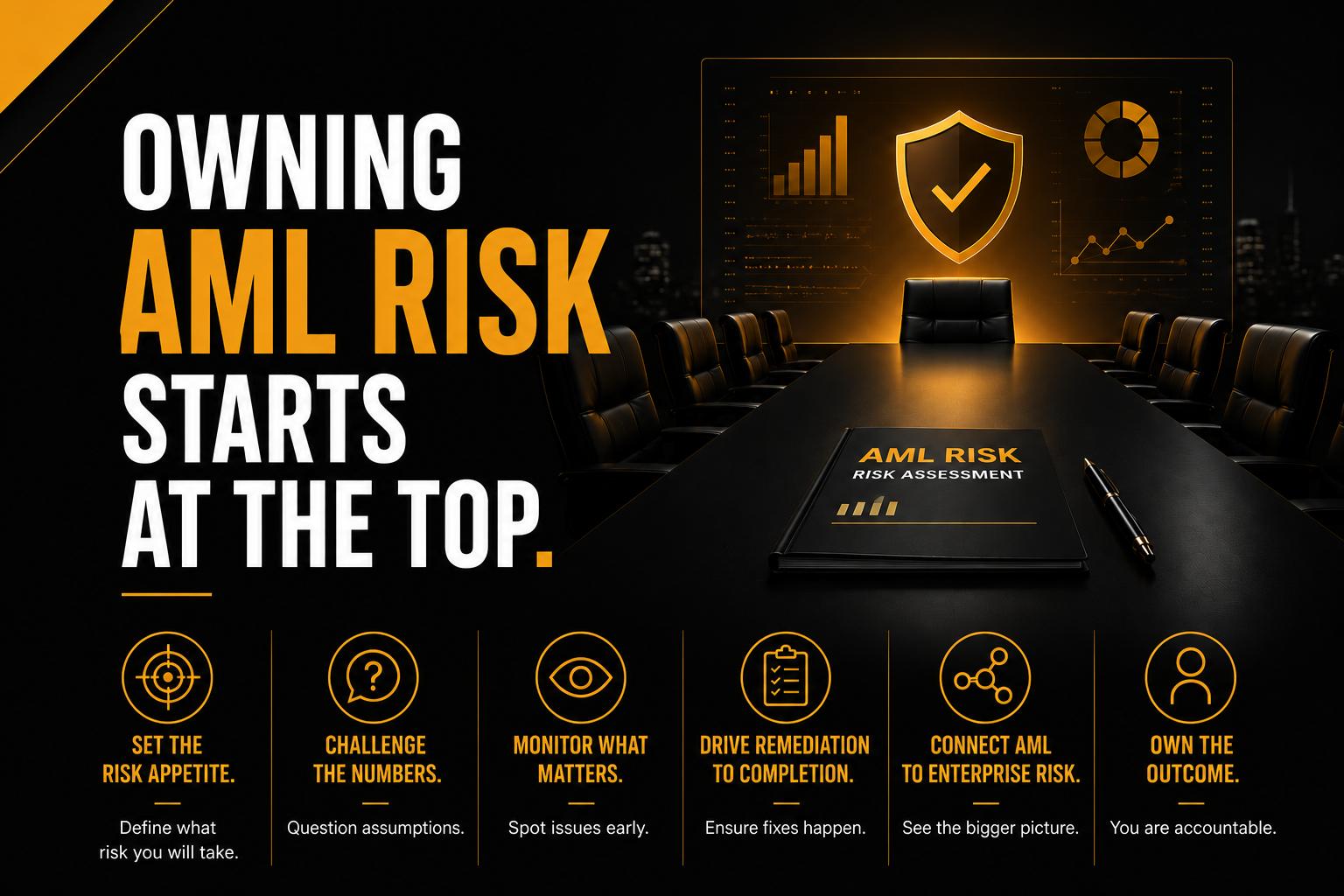
What the board does need to do is harder to fake:
Set the risk appetite, and mean it. A risk appetite statement isn't a paragraph that says "we take compliance seriously." It should say, in plain terms, which customers the business won't serve, which products carry too much exposure, and where the line sits between acceptable risk and a problem waiting to happen. If your risk appetite statement could apply to literally any company in any industry, it isn't one.
Push back on the numbers, not just read them. When a risk assessment says residual risk dropped from high to medium, a good board doesn't just accept that. It asks why. Did controls actually improve, or did someone just recalibrate the scoring? Real oversight means treating every risk rating as a claim that needs evidence.
Stay close enough to spot a pattern. Directors don't need daily visibility into alerts and case files but do need to know when monitoring performance is slipping, when audit findings keep repeating, or when the business has grown into risk categories nobody flagged a year ago. Small gaps compound. Boards that only look up once a year miss the moment they were still fixable.
Actually follow through on remediation. Finding a problem is the easy part. Boards are responsible for making sure the fix gets resourced, staffed, and finished on schedule, not parked in a slide deck for next year's meeting. A remediation plan with no board follow-up is just a wish list.
Connect the dots across risk types. Financial crime risk doesn't sit in its own silo anymore. It overlaps with fraud, cyber risk, and reputational exposure constantly. A board that reviews AML risk in isolation from the rest of the enterprise risk picture is looking at half the map.
None of this requires a director to become a compliance expert overnight. It requires them to stop treating the AML update as the part of the meeting where everyone quietly checks their phone.
The Difference Between a Board That's Informed and One That's Just Present
Picture two boards reviewing the exact same AML risk report.
Board One skims the summary page, notes that risk is "moderate," and moves to the next item. Total time spent: four minutes. Total questions asked: zero.
Board Two asks why the risk rating shifted from last quarter. They ask what's driving the increase in flagged transactions in one business line. They ask the MLRO, directly and without a filter, what's keeping them up at night. Then they follow up on last quarter's remediation item before approving anything new.
Same report, right?
But only one of those boards is actually doing the job regulators now expect.
What separates them usually comes down to three things:
|
What Good Oversight Requires |
What It Looks Like in Practice |
|
Real reporting, not just data |
Heat maps, trend lines, and appetite breaches — paired with a written explanation of why, not just what |
|
Direct access to the MLRO |
The MLRO reports concerns unfiltered, without a manager softening the message on the way up |
|
A habit of asking uncomfortable questions |
Regular probing on blind spots, resourcing gaps, and what could realistically breach the risk appetite next |
The organizations that get this right treat the MLRO less like someone delivering a status update and more like a witness being asked to explain what they've actually seen. That distinction matters more than almost anything else on this list.
Where Boards Get This Wrong (and What It Costs Them)
In Canada specifically, the cost of getting this wrong has gone up. A board that treated AML oversight as a formality in 2022 is operating under a very different risk calculus in 2026.
The pattern in enforcement cases is remarkably consistent. It's rarely a total absence of a compliance program. It's usually a program that existed on paper but drifted away from what the business actually did.
A risk assessment that hadn't been updated in years. A written AML policy describing a company that no longer resembles the one actually operating. Reports that stopped reaching the board in any meaningful form.
Every one of those is a governance failure before it's a compliance failure.
The MLRO can only escalate what they know. The board can only act on what reaches them. When that chain breaks, everyone finds out at the same time, usually from a regulator.
Where Technology Actually Helps (and Where It Doesn't)
A modern risk platform can give a board something a spreadsheet never will: real-time, consistent, traceable reporting that doesn't depend on someone manually reconciling three different tracking sheets before a meeting. That matters. Boards can't challenge what they can't see clearly, and a stack of disconnected documents makes clear visibility nearly impossible.
But a dashboard can flag that residual risk is climbing. It can't decide whether that's acceptable, whether it fits the organization's stated requirements. That's still a human call, and it's still the board's call to make.
What This Means If You're Building or Fixing a Program
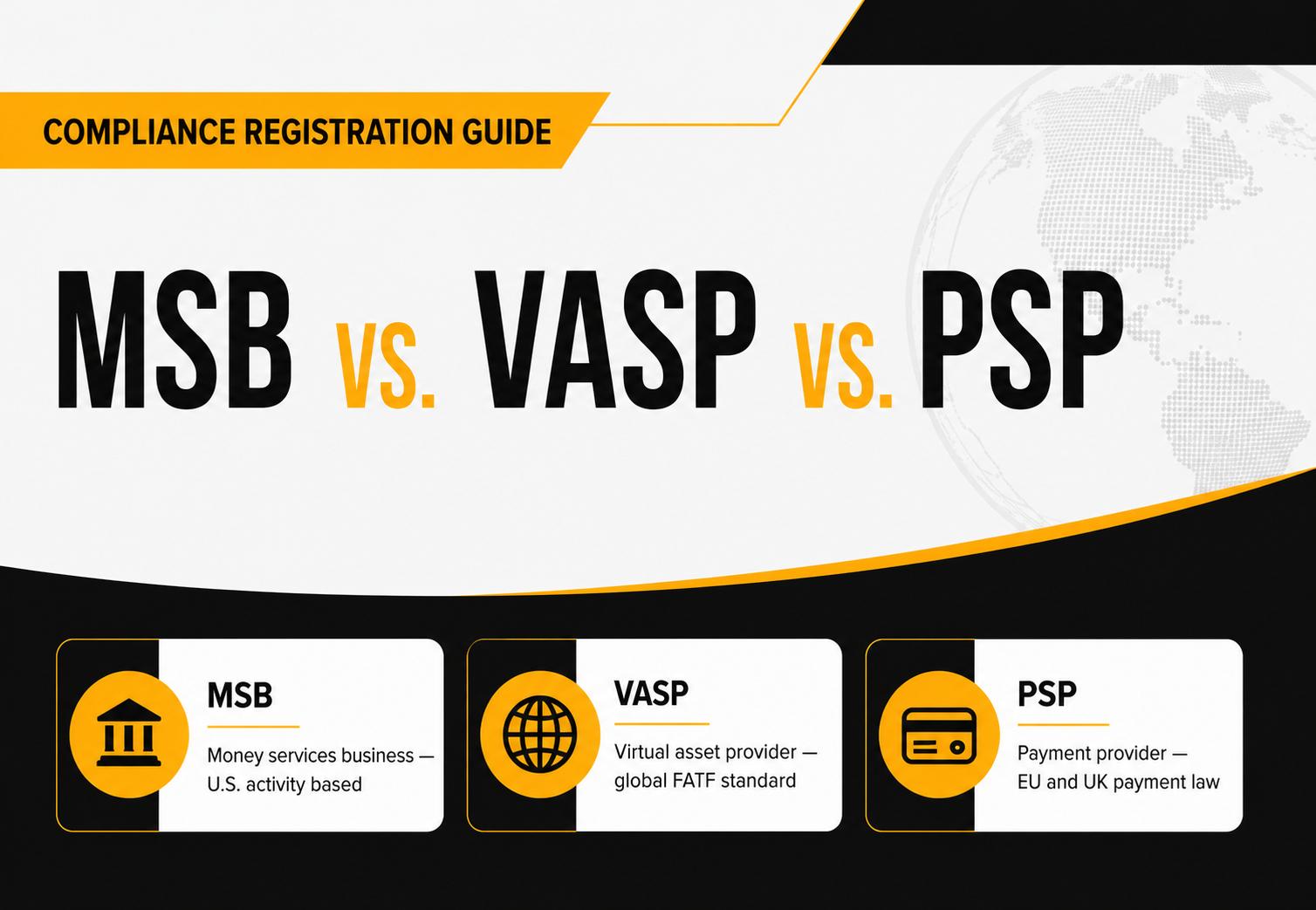
If reading this made you mentally run through your own board's last few meetings and wince a little, you're not alone. Most organizations, especially fast-growing fintechs, MSBs, and crypto platforms, inherit an AML program built for a smaller, simpler version of the business. The board oversight structure often hasn't caught up to what the company has actually become.
The fix usually isn't a total rebuild. It's closer to a recalibration: a risk appetite statement that actually says something, reporting that gives the board a real picture instead of a summary slide, and an MLRO or CAMLO who has a direct, unfiltered line to the people making the final call.
That last piece trips up a lot of growing businesses. Not every company is ready to hire a full-time, in-house Chief AML Officer, and not every board has the internal bandwidth to build this structure from scratch. That's exactly the problem an outsourced CAMLO or MLRO exists to close: a named, qualified compliance officer who reports to your board the way regulators expect, without the overhead of a full internal hire.
FAQ: The Board's Role in AML Risk
Does every regulated business need board-level AML oversight, or just banks?
Every business that falls under FINTRAC, FinCEN, or an equivalent regulator needs it, not just large banks. That includes MSBs, crypto platforms, and fintechs. Regulators apply the same governance expectations regardless of company size, even if the reporting is scaled to fit a smaller organization.
What's the actual difference between the MLRO's job and the board's job?
The MLRO runs the AML program day to day: monitoring, reporting, filing, and managing the compliance team. The board sets the risk appetite, challenges the MLRO's findings, approves remediation, and makes sure AML risk gets weighed alongside every other major business decision. One runs the program. The other is accountable for whether it's working.
Can a small MSB really be expected to have this level of board oversight?
Yes, though the scale of reporting can flex. A smaller MSB doesn't need a 40-page quarterly deck, but it does need a clear risk appetite, a board (or equivalent leadership group) that reviews AML risk on a real schedule, and a compliance officer who can escalate concerns directly. The expectation is engagement, not paperwork volume.
What happens if a board ignores repeated AML warnings from its MLRO?
It becomes a documented governance failure, and regulators increasingly look for exactly that paper trail during examinations. A board that received warnings and didn't act carries a very different risk profile than one that was never informed. Direct MLRO-to-board reporting exists partly to prevent this exact scenario.
How do we know if our board's AML oversight is actually enough?
A useful gut check: could your board explain, in plain language, what your current risk appetite actually excludes? Could they name the last remediation item they followed up on? If those questions draw blank stares, the oversight structure needs work, regardless of how polished the annual risk report looks.
Get Your Board's AML Oversight Where It Needs to Be
Regulators aren't going to loosen their expectations of boards anytime soon; if anything, the direction has been the opposite. Getting ahead of that starts with knowing exactly where your current governance structure stands.
AML Incubator provides outsourced CAMLO and MLRO coverage for fintechs, MSBs, and crypto platforms across Canada, the US, UAE, and Australia, giving your board a named, qualified compliance officer with the direct reporting line regulators expect. We also help boards build or fix the reporting structure itself, so risk appetite statements, risk assessments, and remediation tracking actually hold up under regulatory scrutiny.
Other ways we can help:
-
Outsourced CAMLO and MLRO services, with direct board-level reporting
-
Risk appetite statement development and review
-
AML program and risk assessment gap analysis
-
Remediation planning for identified control weaknesses
-
FINTRAC and FinCEN registration and compliance support
🌐 amlincubator.com 📧 hello@amlincubator.com